
Research Shows Gambling Disorder Involves Brain Changes


New brain imaging evidence shows gambling disorder is linked to altered reward and control circuits, not simply poor self-control.

 LISTEN TO THIS ARTICLE:
A doctoral study led by Albert Bellmunt Gil at the University of Turku in Finland assembled multiple neuroimaging techniques to map how gambling disorder alters brain structure, chemistry and function. Using two independent cohorts that compared people diagnosed with gambling disorder to healthy control participants, the research identified weakened connectivity between the frontal cortex and subcortical reward hubs – commonly called fronto-striatal circuits – as a defining feature.
"Connections between the dorsolateral frontal cortex and nucleus accumbens were weaker than normal, which may make it harder to stop gambling once urges arise", Bellmunt Gil said. The dorsolateral prefrontal cortex is central to planning and impulse control, and the nucleus accumbens sits at the heart of the brain's reward system; disruption between these nodes offers a mechanistic explanation for why some people struggle to resist gambling despite clear negative consequences.
The study also reported heightened responsiveness to gambling-related cues in the dorsal striatum, a pattern frequently observed in alcohol, nicotine and opioid addictions. By integrating structural MRI, functional MRI and neurotransmitter-sensitive measures, the work links abnormal circuit organization with changes in serotonin signaling and opioid-related cue reactivity, suggesting both pre-existing vulnerability and the possibility that chronic gambling can further reshape neural networks.
Related: Pan-Nordic Gambling Study Begins Data Collection Across Denmark, Finland, Norway and Sweden
More Responsible Gambling
 Responsible Gambling
Pennsylvania Gaming Control Board Launches Youth Gambling Awareness Campaign
Mar 12, 2026
 Responsible Gambling
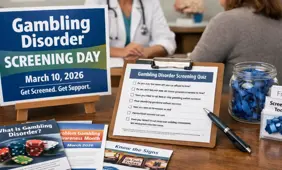
Gambling Disorder Screening Day 2026 Promotes Early Detection of Addiction
Mar 10, 2026Implications for Treatment and Policy
Gambling disorder affects an estimated 1% to 2% of adults worldwide and is listed in major diagnostic manuals – such as the DSM-5 and ICD-11 – as a behavioral addiction that resembles substance use disorders in both clinical impact and underlying brain biology. Clinicians and public-health authorities have increasingly treated it as more than risky behavior, calling for medical pathways for diagnosis and care.
Bellmunt Gil highlighted the translational angle: "Our findings point to concrete neural targets. Non-invasive brain stimulation to modulate frontal control regions, and medications that influence serotonin and opioid systems, could complement psychosocial therapies. But these approaches must be tested in rigorous clinical trials before being recommended."
Independent addiction researchers say the study strengthens the case for interdisciplinary treatment trials. Professor Marc N. Potenza, who has published extensively on neural mechanisms of behavioral addictions, has argued in the past that neurobiological evidence should not replace but rather augment psychological and social interventions. Public-health officials in jurisdictions with expanding legal gambling markets – such as the United Kingdom, several U.S. states and parts of Scandinavia – may use such evidence to prioritize screening and fund treatment services.
Regulators and operators also face practical considerations. If gambling triggers durable shifts in brain circuits, prevention and responsible-gambling measures – limits on advertising, self-exclusion tools, affordability checks and early intervention – acquire a stronger medical rationale. At the same time, the study does not establish causality for every individual; neural differences may reflect both predisposition and the neuroplastic effects of long-term gambling exposure.
Treatment Targets and Next Research Steps
The study points to several concrete next steps for researchers and clinicians. Randomized controlled trials are needed to evaluate whether targeted interventions – transcranial magnetic stimulation (TMS) over dorsolateral prefrontal cortex, opioid antagonists such as naltrexone, or selective serotonin reuptake inhibitors – can reduce gambling frequency, cravings and functional harms. Longitudinal imaging studies would help disentangle whether fronto-striatal changes precede the disorder or accumulate with problem gambling.
Ethical and practical questions remain: the safety and efficacy of neuromodulation for behavioural addictions require careful assessment, and any pharmacological strategy must be balanced against side effects. For policymakers, the research reinforces that gambling disorder is a health issue with identifiable neural substrates – supporting calls to integrate treatment pathways into mental-health services and to fund prevention in communities at risk.
RELATED TOPICS: Responsible Gambling
Latest News


 Responsible Gambling

Review this New Post
Leave a Comment
User Comments
Comments for Research Shows Gambling Disorder Involves Brain Changes