Best Gambling Anime That Know the Risk Is the Story

Expertise: Online casino, iGaming
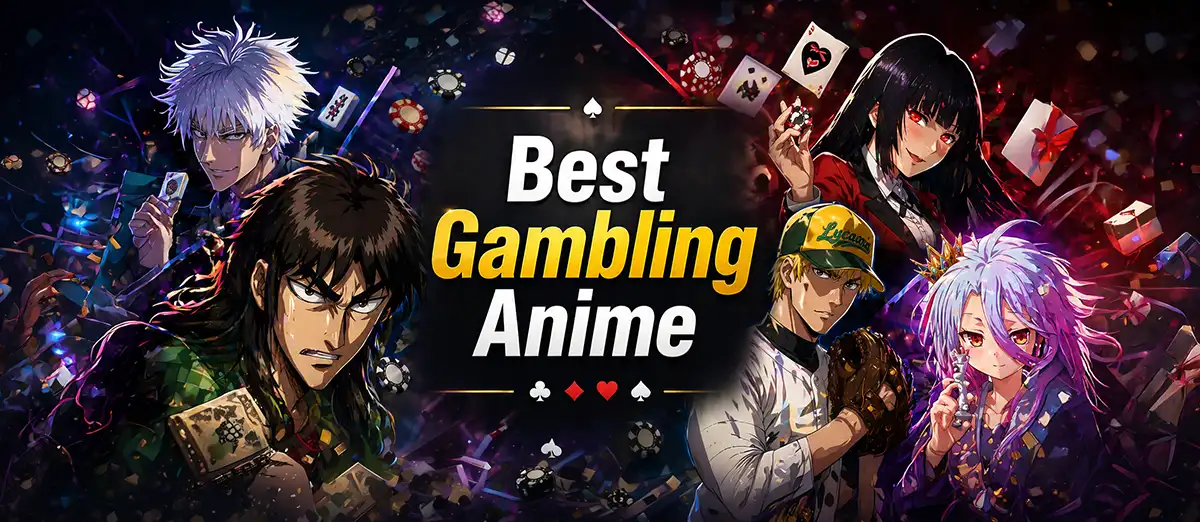
The best gambling anime do not treat cards, dice or mahjong tiles as decoration. They understand why people watch a player stare down a losing hand, refuse to fold and turn a bad position into a psychological trap. That tension is the real hook. A strong gambling anime is rarely about luck alone. It is about pressure, control, ego, fear and the strange confidence that surfaces when someone at the table believes they can read every other person in the room.
That is why the genre holds a loyal following even though the catalogue is far smaller than action, fantasy or romance anime. Viewers who finish Kaiji, Akagi, One Outs or Kakegurui quickly realise the truly great titles are rare, and they stand apart because they know how to turn rules into drama. Every game needs structure. Every risk needs a cost, and every win needs to feel earned rather than handed over by the script.
The conversations around anime gambling recommendations tend to circle the same handful of titles, and that is not a failure of imagination but an honest signal. The genre is genuinely difficult to write well. A creator must explain the rules clearly enough for viewers to follow the strategy without turning the episode into a lecture. Characters need intelligence without becoming impossible. Losses need weight without becoming repetitive misery. Many shows can stage a game, yet far fewer can make the viewer care about every single decision inside it.
What Separates a Great Gambling Anime from the Rest
A good anime about gambling slows the room down. Rather than rushing toward action, it studies silence, hesitation and the small shifts in behaviour that happen under real pressure. A glance across the table can matter more than the cards themselves, and that rhythm sits close to real gambling culture, especially in poker and mahjong, where confidence is a weapon and a single moment of visible panic can ruin a position that looked solid two moves earlier.
The genre works best when the rules stay clear, and the stakes stay personal. Viewers need to understand what each character is risking and why each decision matters. A winning hand only creates tension if losing has genuine consequences. That is the line between a gambling anime that grips and one that simply uses cards as a backdrop without ever making the audience feel the weight of what is at stake.
Below are our top gambling anime picks for anyone drawn to high-stakes games, sharp mind play, and characters who thrive under pressure.
Kaiji
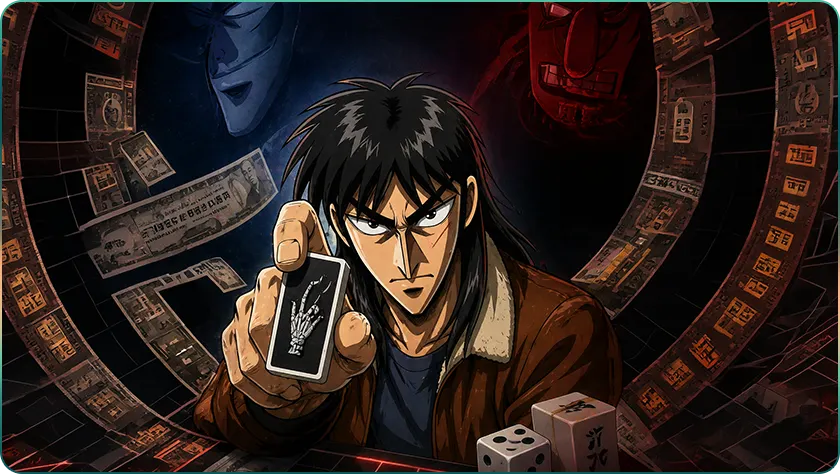
The first name that comes to mind for every fan is Kaiji. The series follows a desperate man caught inside games where debt, survival and humiliation sit behind every decision, and what makes it the sharpest anime gambling story in the genre is how well it understands losing. Kaiji makes mistakes, overthinks, panics and recovers just late enough to keep the viewer tense through situations that should have ended him much earlier.
That human weakness is the reason the series holds up. Many gambling stories make their lead too clean, too clever or too untouchable to be believable. Kaiji suffers through the game rather than floating above it. His wins feel messy and earned, and his losses feel avoidable in retrospect. Anyone who has watched a real player chase a bad decision well past the point of sense will recognise that pattern immediately, and that recognition is what makes the show hit differently from anything else in the genre.
The show also understands that the worst gambling decisions rarely come from stupidity. They come from desperation and from the very human tendency to believe that one more round will fix everything. Kaiji captures that psychology without making the character pathetic. He is sympathetic precisely because the logic that traps him is recognisable. Viewers do not watch him from a distance. They follow him into it.
Akagi
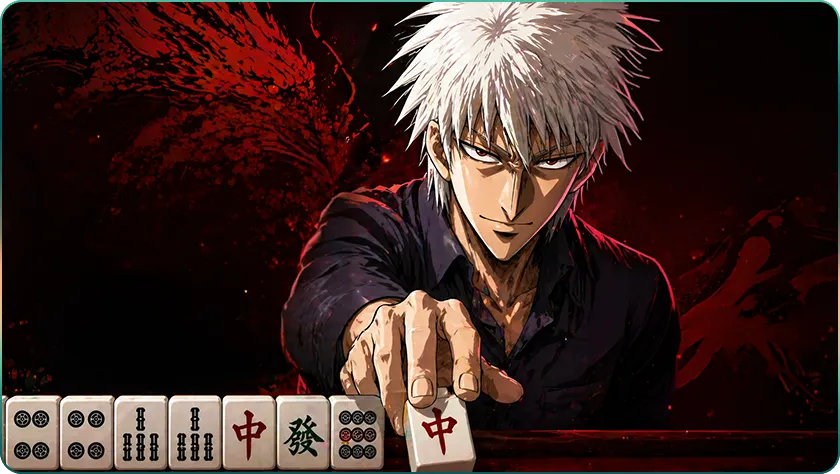
Akagi focuses on mahjong, but its intensity can match any poker anime for sheer psychological weight. The title character does not simply play the game well. He controls the mood around the table, reads fear in the way opponents shift their tiles and pushes people into bad decisions long before the final round is over. The show makes clear that Akagi wins before the hand ends, and it structures every scene around that premise with impressive discipline.
What makes Akagi so respected among fans of gambler anime is that it creates enormous pressure with almost no traditional drama. No casino floor, no flashing lights, no music swells at the critical moment. The tension comes from nerves and from the absolute stillness Akagi maintains in situations where most players would visibly crack. The show uses his composure as a constant instrument. Every time an opponent expects emotion and gets nothing, the scene tightens.
It is also a show that rewards patience. Mahjong has a learning curve for viewers unfamiliar with the game, and Akagi does not always make things easy. But that commitment to the actual mechanics is part of what gives the series its authority. The strategic sequences feel real because they are built around real decisions, not invented tension. By the time a round reaches its conclusion, the viewer understands exactly why it matters.
Kakegurui
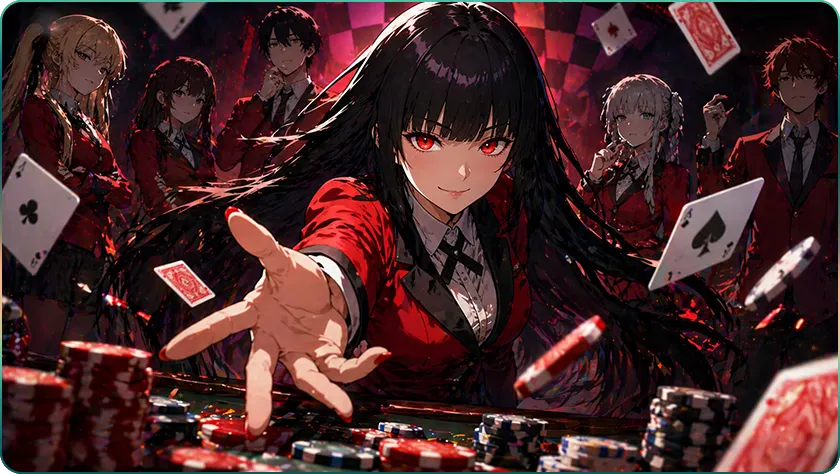
Kakegurui reached a wider audience than most gambling anime because it understood spectacle. Hyakkaou Private Academy turns gambling into a social hierarchy, with students using games to control status, power and each other. Yumeko Jabami enters that world not simply to win but to feel the risk at full volume, and that appetite for danger is what separates her from almost every other protagonist in the genre. She does not gamble to survive or to prove a point. She gambles because the sensation of genuine uncertainty is what she is actually after.
This is a distinction that matters more than it might seem at first. Most casino anime protagonists are driven by survival, revenge or ambition. Yumeko is driven by compulsion, and the show frames that honestly rather than glamorising it. Kakegurui is one of the few anime that engages seriously with the psychology of gambling addiction without turning it into a lecture. The academy’s social structure does that work quietly in the background, showing what compulsive gambling costs people who cannot stop, even when they understand the consequences. That makes it a natural point to think about responsible gambling tools in the real world, where limits, time-outs and self-exclusion exist to stop risk from turning into harm.
Kakegurui’s reach goes beyond the anime itself. Its characters, manga, spin-off, voice cast and live-action adaptation have all kept the series active in fan discussions long after its first release. That wide interest is part of why Kakegurui still feels like the best that gambling anime can offer.
One Outs

One Outs gets missed in standard lists because it looks like a baseball anime on the surface. That is a significant oversight. The series is built entirely around contracts, odds, manipulation and psychological pressure. Toua Tokuchi treats every pitch as a negotiation between risk and reward, and the show structures its tension around incentives rather than athleticism. The sport is the arena. The gambling logic is the actual story.
It is one of the most intelligent examples of gamble anime storytelling. Tokuchi wins by understanding what opponents are protecting. He knows when a manager is locked into expectations, when a batter’s fear matters more than their technical ability and when the best move is to let someone else’s pressure do the work. Using another person’s psychology as the actual strategy is something very few gambling stories manage to articulate as cleanly.
The contract at the centre of the series is what makes the stakes feel genuinely unusual. Tokuchi earns money for every out he records but loses a fixed amount for every run conceded, which means every inning carries real financial consequences in both directions. That structure turns each game into a live negotiation between risk and control, and the show squeezes every episode for the tension that creates. Viewers who arrive expecting sports action tend to stay for something closer to a chess match.
No Game No Life
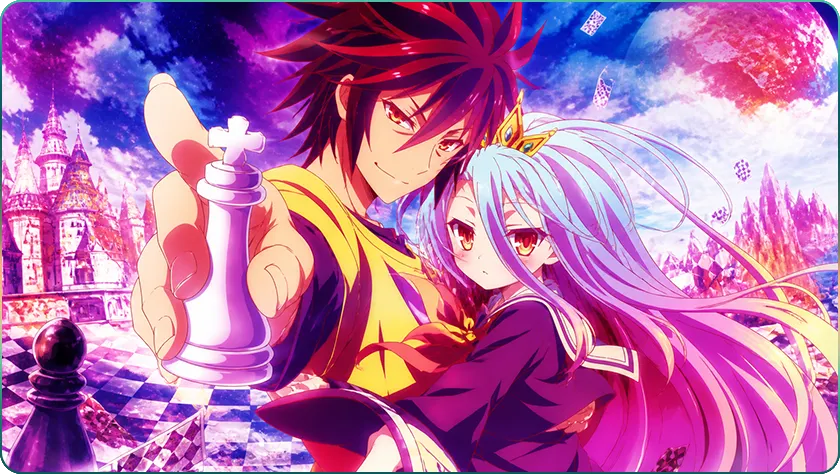
No Game No Life is not a traditional casino anime. Its world settles every dispute through games and wagers, and Sora and Shiro win not through luck but through system analysis, rule reinterpretation and a precise understanding of how opponents think. The show is brighter and more fantastical than Kaiji or Akagi, but its gambling structure is rigorous, and its treatment of deception and information control sits squarely inside the genre’s core themes.
The series also works well as an entry point for viewers who find the bleaker debt-and-survival format too heavy. The stakes are still real within the world’s own logic, and the consequences of losing are serious, but the tone gives the audience room to enjoy the strategy without the emotional weight of watching someone spiral. For viewers who want anime with gambling that prioritises intelligence and wit over psychological damage, No Game No Life is the most consistent answer the genre has produced.
What the show does particularly well is treat its protagonists’ skills as something that still requires effort. Sora and Shiro do not win effortlessly. They analyse opponents, gather information, exploit rules that others overlooked, and occasionally bluff with precision. The wins feel earned rather than predetermined, and that distinction is what keeps the series engaging past the initial novelty of its premise.
Five More Gambling Anime to Keep on Your Radar
These five titles lead the genre, but several others are still worth a closer look.
Kakegurui Twin is the spin-off that follows Mary Saotome before Yumeko arrives at the academy. It is calmer than the main series and spends more time on the social mechanics of the school’s gambling hierarchy. If you want more of that world without the chaos, Twin is the natural next step.
Death Parade places people inside games after death, where the choices they make under pressure reveal fear, guilt and instinct. There are no casinos or card tables in the traditional sense. Characters gamble with identity and memory rather than money. It is one of the stranger entries in the anime about gambling genre, but also one of the most honest about what pressure actually does to people.
Legendary Gambler Tetsuya is set in post-war Japan, following a mahjong player who learns the difference between skill and deception at a time when survival often depended on both. The period setting gives it a texture most modern gambling anime lack. It is rougher around the edges than Akagi but shares the same respect for mahjong as a vehicle for psychological combat.
Rio: Rainbow Gate leans directly into casino imagery in a way most titles in this genre do not. The setting, characters and tone all revolve around the gambling floor, which makes it one of the clearest examples of casino anime in a literal sense. It is lighter and less precise than the series above it, but for viewers specifically interested in the casino environment as a backdrop rather than an abstraction, it fills a gap the stronger titles leave open.
Tomodachi Game sits at the edge of the gambler anime conversation. Debt and betrayal drive the story, and trust becomes the currency being wagered. Friendship is what is actually at risk, which gives the wagering dynamic a different kind of emotional weight. It is closer to a psychological thriller than a traditional gambling drama, but the pressure mechanics are the same.
Gambling Stories Go Beyond Anime
Gambling has always travelled well across entertainment because it gives writers an instant pressure point. Anime uses it through mind games, table reads and extreme stakes, but the same pull shows up in video games, TV shows, manga and books. The format changes, yet the appeal stays familiar: someone has limited information, something real to lose, and just enough confidence to make a dangerous decision.
That crossover is especially clear in gaming, where card tables and wager-based side activities can turn a small side quest into a proper test of timing and nerve. The Crimson Desert gambling guide shows that well, with Duo card games using pattern reading rather than simple luck.
When talking about anime, it makes sense to look back at its source material. Manga often gives gambling stories more room to build tension, stretch out mind games and explore risk in greater detail, which is why our best gambling manga picks are a useful next stop.
Why These Gambling Anime Still Hold Up
The best gambling animes last because the games reveal something specific about the people playing them. Kaiji turns risk into desperation. Akagi turns it into control. Kakegurui turns it into a compulsion. One Outs turns it into a calculation. No Game No Life pushes it into pure strategy, where intelligence becomes the only real currency.
That is why the genre keeps pulling viewers back, even with a short list of true standouts. The setting can change from a casino table to a school, a baseball field or a fantasy world, but the pressure stays the same. Someone has to make a decision with incomplete information, and the result tells us more about the player than the game itself.