
Romania Gives Cities Power to Ban Betting Shops and Slot Halls


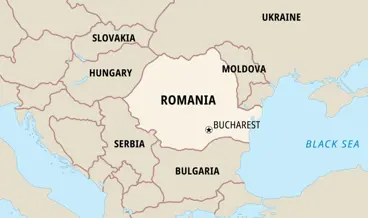
BUCHAREST, Romania – Romania has overhauled its gambling rules, giving cities the power to ban betting shops and slot machine halls through local approval controls.
 LISTEN TO THIS ARTICLE:
The change could force operators to rethink expansion plans while giving residents a stronger voice over where gambling venues can operate.
The new rules were introduced through an emergency decree that now requires licensed operators to secure not only a national permit but also local authorisation before opening a gambling venue. In practice, that gives mayors and local councils a decisive veto.
Related: Romania Proposes Raising Gambling Age to 21 and Restricting Online Ads
Local Authorities Get the Final Say
For years, gambling venues in Romania were approved centrally, even as betting shops and slot halls spread through residential districts and near schools. Local authorities often complained that they had little practical power to stop that growth.
That has now changed. According to Diana Stoica, an MP from the Save Romania Union party who led the legislative push, councils can now clearly decide whether gambling businesses are allowed in their communities and under what conditions.
She argued that the old system treated gambling more lightly than ordinary local businesses. In one of the sharper comparisons made during the campaign, Stoica said opening a flower shop required city hall approval, while gambling venues did not.
Cities Already Moving Toward Full Bans
At least nine Romanian cities are already considering complete bans on gambling halls, and officials believe more than 200 localities could eventually follow.
One of the clearest examples is Slatina, where Mayor Mario De Mezzo has said he intends to eliminate all gambling venues as current licences expire. He described the businesses as socially harmful and said the decision came after seeing the damage addiction had done in his community.
De Mezzo spoke about families falling apart and children going hungry after parents lost wages at slot machines. He also recalled the case of a 27-year-old local man who took his own life after heavy gambling losses, describing that as the moment he concluded the halls should disappear from the city altogether.
His position is blunt: if losing gambling revenue means saving lives, the trade-off is worth it.
More Regulation


A Multibillion-Euro Industry Under Pressure
Romania’s gambling sector is a multibillion-euro market and generated close to €1 billion in tax revenue in 2025. That fiscal contribution has long been one of the main reasons successive governments have hesitated to impose tougher restrictions.
But pressure has been building. Residents, campaigners and public health advocates have argued that the social cost of addiction has been ignored for too long. Stoica has framed the issue not simply as urban planning or business regulation, but as a public health problem.
Her message has resonated in neighbourhoods where betting shops cluster tightly together. At a recent press conference in Bucharest, she pointed to a residential building with six betting shops at ground level, close to several schools. Her point was simple: this is not a resort strip built around gambling. It is everyday city life.
More Restrictions May Still Follow
The emergency decree may be only the start. Romania’s parliament is also debating additional measures, including raising the minimum age for access to gambling halls to 21, restricting online gambling ads during most of the day, capping losses based on declared income and limiting adverts aimed at children.
The country’s media regulator has already banned celebrities and influencers from appearing in gambling advertising, signalling a broader shift in attitude.
In Bucharest, Mayor Ciprian Ciucu has not yet committed to a full ban, saying he wants to consult the local council first. One option under discussion is limiting gambling venues to specific entertainment areas, such as the Old Town, rather than allowing them to spread through residential districts.
For operators, the message is unmistakable: national approval is no longer enough. For communities that felt ignored, the decree is being seen as long overdue leverage. Romania’s gambling debate has moved out of abstract policy and into town halls, neighbourhoods and family kitchens, where the consequences have always been most visible.
RELATED TOPICS: Regulation


Review this New Post
Leave a Comment
User Comments
Comments for Romania Gives Cities Power to Ban Betting Shops and Slot Halls