
Cornell Launches Three-Year Study to Detect Racehorse Injuries


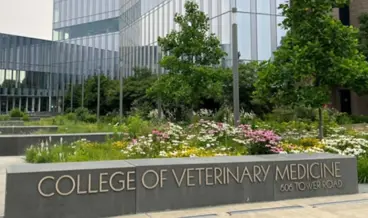
ELMONT, N.Y. – Cornell University’s College of Veterinary Medicine has launched a three-year study near Belmont Park aimed at improving the detection of injuries in Thoroughbred racehorses.
 LISTEN TO THIS ARTICLE:
The project could reshape safety standards in racing, affecting trainers, jockeys and the wider betting market tied to the sport.
The research effort is funded by New York State and The New York Racing Association (NYRA), with a goal of identifying early warning signs that may prevent catastrophic musculoskeletal injuries.
Research Focused on Early Injury Detection
The study will rely on data gathered from horses examined at Cornell Ruffian Equine Specialists, an equine hospital located adjacent to Belmont Park in Elmont. Veterinarians there regularly evaluate racehorses competing in New York’s racing circuit.
Researchers aim to refine the understanding of injury risk in Thoroughbred racing by focusing on several key areas. These include identifying factors that contribute to fatal musculoskeletal injuries, studying the mechanics of the fetlock joint and developing protocols that may help prevent serious breakdowns during training or competition.
Fatal limb injuries remain one of the most serious safety challenges in horse racing. Detecting the early stages of bone damage is difficult, and horses with undetected microfractures can sometimes appear healthy enough to train and race until a major injury occurs.
Related: Churchill Downs and NYRA Take Legal Action Against HISA
Advanced Imaging Technology Installed
To address that challenge, the Cornell Ruffian facility will introduce advanced imaging systems designed to identify early bone abnormalities.
Standing computed tomography scanners will provide high-resolution images of bone structures, allowing clinicians to detect small structural changes before they appear on traditional X-rays. Positron emission tomography equipment will also be installed to detect metabolic activity in bone tissue, helping researchers pinpoint areas where injuries may be developing.
The project will compare several diagnostic methods, including CT, PET scans, magnetic resonance imaging and digital radiographs. By evaluating the accuracy of these tools, researchers hope to determine which technologies can most effectively detect early injury risk.
Major Public Investment in Racing Safety
New York State has committed $18 million over the next three years to fund the study as part of Governor Kathy Hochul’s 2025–26 budget. NYRA has also contributed $2 million toward the purchase of advanced diagnostic equipment.
State officials say the investment reflects a broader commitment to improving the safety of horse racing in New York. Robert Williams, chair of the New York Franchise Oversight Board, described the research as part of a wider effort to protect horses and maintain the long-term strength of the state’s racing and breeding industries.
Lawmakers involved in racing oversight echoed that message. State Senator Joseph P. Addabbo Jr., who chairs the Senate Committee on Racing, Gaming and Wagering, said the research represents a significant step toward strengthening safety standards in the sport.
Assemblywoman Carrie Woerner, chair of the Assembly’s Standing Committee on Racing and Wagering, also highlighted the importance of protecting Thoroughbred welfare while sustaining an industry that carries economic and cultural weight across the state.
More Business



Belmont Park Modernization Supports the Project
The study is closely linked to the broader redevelopment of Belmont Park. Governor Hochul approved a $455 million loan to NYRA to modernize facilities at the historic racing venue, part of a plan to consolidate downstate racing operations in Elmont.
The proximity of the Cornell Ruffian equine hospital to Belmont Park provides researchers with direct access to horses training and competing at the track, creating an environment suited to long-term scientific study.
NYRA President and CEO David O’Rourke said improving equine safety remains a core priority for the organization. He added that expanding access to advanced veterinary diagnostics could help the racing industry better understand and prevent catastrophic injuries.
Results Expected to Influence Racing Practices
Over the next three years, researchers will examine horses both with and without signs of lameness, looking for early indicators of fetlock fractures and other musculoskeletal problems. The study will also investigate biological markers that may signal developing injuries.
Findings will be published in peer-reviewed scientific journals and presented at veterinary conferences, potentially shaping future veterinary protocols and racing safety policies.
For the racing industry, the research represents more than an academic project. If the new technologies prove effective at identifying injuries before they become catastrophic, they could fundamentally change how horses are screened, trained and cleared to compete.
RELATED TOPICS: Business
Latest News
 Responsible Gambling



Review this New Post
Leave a Comment
User Comments
Comments for Cornell Launches Three-Year Study to Detect Racehorse Injuries