
Fenton Joins UK Levy Board as Debate Over Gambling Harm Funding Continues

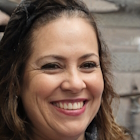
Kevin Fenton has been appointed to the Department for Culture, Media and Sport’s Gambling Levy Program Board.

 LISTEN TO THIS ARTICLE:
The appointment places the public‑health expert at the centre of a contentious new system for funding measures to prevent and treat gambling‑related harm in Great Britain, as questions persist about how evidence will be used and how insulated the mechanism will be from political and industry pressure.
The statutory gambling levy, which began operating in April 2025 and was set out in government guidance published in December 2024, replaces the previous voluntary donations model. The levy is collected by the UK Gambling Commission on ministers’ instructions and has yielded roughly GBP 120 million in its first year. Government guidance specifies that proceeds must be devoted exclusively to research, prevention and treatment of gambling harm.
Levy Structure and Funding Allocations
Under the new framework, money is distributed across three principal pillars. Research receives 20% of the total and is coordinated by UK Research and Innovation (UKRI), which is developing a strategic research plan intended to close gaps in evidence on prevalence, social costs and effective interventions. Prevention is allocated 30%, split between the Office for Health Improvement and Disparities (OHID) and local authorities to support community and population‑level measures. The remaining 50% is earmarked for treatment services, managed by NHS England and devolved health services in Scotland and Wales.
Contributions are assessed on the basis of licensed activity and gross gambling yield. Operators offering online services and software suppliers face higher rates than some land‑based businesses. Payments are due annually by October 1. The National Lottery is excluded from the levy because its funding operates under a different statutory regime.
Fenton’s inclusion on the Program Board signals an emphasis on health‑led responses. He has previously argued that gambling should be addressed as a public health issue affecting entire populations, not only individual gamblers, and has called for restrictions on exposure to gambling advertising. In announcing his appointment, Fenton said: "I welcome the opportunity to help ensure that levy funding is used to reduce harm across communities. My priority will be to promote evidence‑based prevention and accessible treatment so the funding reaches those who need it most."
Related: Escapism Identified as Key Driver of Gambling Addiction in Updated Motives Scale
More Responsible Gambling

 Responsible Gambling
DGOJ Sets New Consumer Protection Priorities for Spain Gambling Market
Mar 20, 2026 Responsible Gambling
MGCB Expands Don’t Regret the Bet Website with New Prevention Tools
Mar 18, 2026Oversight and Data Integrity
Despite the clear allocation rules, debate continues over how data and evidence will shape policy. Last year, Ed Humpherson of the Office for Statistics Regulation raised concerns about the interpretation of figures in a government‑commissioned study of gambling’s social costs, warning that correlations reported in the analysis should not be taken as proof of causation. Humpherson cautioned: "The way results are communicated matters; overstating what the data demonstrate risks misleading both the public and policymakers."
The government has sought to bolster governance by establishing a Delivery Group to work alongside the Program Board, aiming to coordinate activities across research, prevention and treatment and to produce annual transparency reports on spending and outcomes. Ministers have said these mechanisms are intended to preserve independence and build public trust, but critics remain sceptical about potential industry influence and political interference in priority‑setting.
Observers from public health charities, clinical services and the research community are watching closely. One senior clinician commented: "Turning the levy into a predictable, statutory revenue stream is an important step – but its success will be judged by whether services on the ground improve and whether research funding prioritises unanswered questions that will genuinely inform policy."
How Fenton’s presence will affect those priorities is likely to become clearer over coming months as UKRI finalises its research agenda, OHID and local authorities begin to commission prevention programmes, and NHS services map treatment capacity. The Program Board is due to publish a forward plan and will contribute to the first annual report on levy distribution and impact.
Stakeholders across government, academe and the health sector say sustained transparency, robust statistical practice and clear boundaries around governance will be essential if the new levy is to deliver the promises behind its creation. With the funding stream now active, the next year will be decisive in demonstrating whether the statutory system can translate revenue into measurable reductions in gambling harm.
RELATED TOPICS: Responsible Gambling





Review this New Post
Leave a Comment
User Comments
Comments for Fenton Joins UK Levy Board as Debate Over Gambling Harm Funding Continues