
Russian Finance Minister Proposes Legalisation of Online Casinos

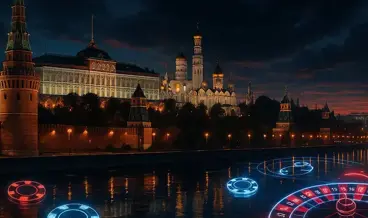
Russia's finance minister has urged the Kremlin to consider permitting online casino gambling as a new source of state revenue.
 LISTEN TO THIS ARTICLE:
Finance Minister Anton Siluanov has reportedly asked President Vladimir Putin to review a plan to legalise online casinos in Russia, according to recent coverage in national business press. The proposal envisions a single, state‑approved operator to channel bets from adults aged 21 and older through a centralised platform and subjects all gambling revenue to a minimum tax rate of 30 percent. Officials estimate the measure could add roughly 100 billion roubles (about 1.1 billion) annually to government coffers.
The idea marks a significant shift from current law. Online casino gaming has been banned in Russia since 2009; land‑based casinos are confined to a small number of special economic zones such as Primorye Krai, home to resorts including Tigre de Cristal and Shambala. Betting on sports remains available through licensed betting shops, but online platforms operate largely outside the legal framework.
The Finance Ministry has highlighted the size of the regulated industry – roughly 1.7 trillion roubles (circa 18.9 billion) in annual activity – while independent reporting points to a much larger shadow market. Moscow media estimates some 100 illicit platforms target Russian customers and may be generating up to 3 trillion roubles a year, a disparity that proponents of reform say underlines the need for a regulated online offering.
More Regulation
Reactions from Industry and Policy Observers
Supporters of Siluanov's plan frame legalisation as a pragmatic tool to pull money away from unregulated operators and into transparent channels. "Bringing online operators into a centralised, accountable system would allow the state to monitor flows, enforce consumer protections and capture tax revenue that currently slips into the black market", said a Moscow‑based gaming policy analyst.
But critics warn that the timing and mechanics raise red flags. Some opposition voices, legal scholars and international observers argue that a state‑dominated operator model would concentrate control and could be vulnerable to political interference. A different set of critics interpret the proposal through the prism of Russia's fiscal pressures: low oil prices, sustained military expenditure and the continuing economic fallout from the conflict in Ukraine.
RBC Ukraine has highlighted the scale of Russia's wartime spending, reporting a cumulative cost to the Russian state in the tens of trillions of roubles – estimates that have been used by opponents to characterise the gambling proposal as a revenue‑raising expedient amid wider budgetary strain.
Industry participants outside Russia also monitor developments closely. "Regulation is better than prohibition when it comes to consumer protection and anti‑money‑laundering controls, but the design matters: taxes, licensing transparency and independent oversight are essential to prevent state capture or criminal exploitation", said an anonymous compliance director at a European sportsbook with experience in emerging markets.
Concerns Raised by Ukraine and Regional Analysts
That concern is echoed by Ukrainian authorities. The National Resistance Centre, an organ of Ukraine's Special Operations Forces, has warned that Moscow may plan to extend online gambling into occupied territories, including parts of Luhansk in the Donbas. The Centre said: “Effectively, legalising casinos in occupied territories is another element of a centralized model for exploiting these regions. Under the guise of economic measures, gambling is turned into a tool of war financing, channeling civilian funds to support the occupation regime under direct Kremlin control.”
For now, the plan remains in the discussion stage. Any move to legalise online casinos will require presidential approval and likely a raft of legislative and regulatory changes, including the establishment of the proposed central operator and mechanisms for licensing, compliance and taxation. Observers say implementation could also bring international scrutiny, particularly if activities were extended into occupied Ukrainian territories.
As debate continues in Moscow, the contrasting paths of neighbouring Ukraine serve as a reminder of divergent policymaking approaches. Ukraine relegalised gambling in 2020 and introduced a new regulator, PlayCity, as part of a formal licensing framework; Russia's potential pivot would represent a major policy reversal after more than a decade of prohibition.
Legal and financial analysts say the core questions now are governance and intent: whether reform would genuinely curb illegal bookmaking and protect consumers, or whether it would become an expedient revenue source with limited transparency.
RELATED TOPICS: Regulation
Latest News
 Responsible Gambling

Review this New Post
Leave a Comment
User Comments
Comments for Russian Finance Minister Proposes Legalisation of Online Casinos