
Gambling Disorder Screening Day 2026 Promotes Early Detection of Addiction


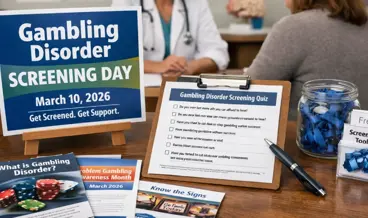
Gambling Disorder Screening Day will be observed worldwide on Tuesday, March 10, 2026, as healthcare providers and organisations push for earlier detection of gambling addiction.
 LISTEN TO THIS ARTICLE:
The initiative encourages players to assess risky behaviour while urging health systems and gambling operators to improve support and prevention tools.
The event takes place every year on the second Tuesday of March as part of Problem Gambling Awareness Month, an international campaign focused on education, prevention and treatment of gambling-related harm.
Established in 2014, Gambling Disorder Screening Day aims to help identify individuals who may be experiencing gambling-related problems but have not yet sought professional help. Organisers say many cases remain hidden because screening for gambling behaviour is still uncommon in healthcare settings.
A Growing Concern That Often Goes Unnoticed
Gambling Disorder can lead to serious financial, emotional, social and occupational harm. Despite those risks, many people struggling with gambling addiction remain undiagnosed for years.
Research shows that only 15% of Americans report ever being asked about their gambling behaviour by a primary care provider. By comparison, screening for alcohol or tobacco use is routine in many healthcare environments.
Experts say that gap represents a missed opportunity for early intervention. Without screening, gambling harm often becomes visible only after financial losses, relationship conflicts or mental health issues have already escalated.
Gambling itself involves wagering something of value on an event largely determined by chance. While casinos and slot machines often come to mind, gambling also includes activities such as sports betting, lottery tickets, bingo and even informal betting pools.
Mental health professionals diagnose Gambling Disorder using criteria from the Diagnostic and Statistical Manual of Mental Disorders (DSM-5). A diagnosis typically requires persistent gambling behaviour accompanied by symptoms such as chasing losses, hiding gambling activity or risking relationships and employment.
Healthcare Screening Still Rare
Advocates say integrating gambling screening into healthcare systems could significantly reduce harm.
The Division on Addiction at Cambridge Health Alliance, a Harvard Medical School teaching hospital, has played a central role in organising Screening Day initiatives and encouraging medical providers to adopt early detection tools.
The organisation provides a free toolkit for clinics and community groups that includes educational materials, flyers and digital screening tools such as the Brief Biosocial Gambling Screen (BBGS).
Healthcare professionals say even brief screening conversations can help normalise discussion about gambling risks and connect individuals with support services before problems escalate.
Lessons from the 2025 Screening Day Report
According to the 2025 Gambling Disorder Screening Day Report, participation continued to grow across health systems, universities and community organisations worldwide. Screening programs helped identify individuals who showed early warning signs of gambling problems and encouraged them to seek further assessment.
The report also highlighted the importance of expanding screening beyond traditional addiction treatment settings. Organisers noted that primary care clinics, mental health services and community health initiatives could all play a role in early detection.
More Responsible Gambling
 Responsible Gambling
Michigan Gaming Control Board Expands “Don’t Regret the Bet” Campaign
Mar 04, 2026 Responsible Gambling
Florida Gaming Control Commission Promotes Playwise During Problem Gambling Awareness Month
Feb 27, 2026
Understanding Gambling Addiction as Part of a Broader Syndrome
Researchers increasingly view gambling addiction as part of a broader pattern of addictive behaviour.
The Syndrome Model of Addiction, developed by researchers at the Division on Addiction, suggests that behavioural addictions such as gambling often share underlying vulnerabilities with substance addictions like alcohol or drug dependence.
These vulnerabilities can include factors such as mental health conditions, stress, personality traits and social influences. According to researchers, addiction develops through the relationship between individuals and the object of addiction rather than the object itself.
This approach encourages treatment providers to address multiple forms of addiction and related mental health conditions simultaneously rather than treating them in isolation.
A Month Focused on Awareness
Gambling Disorder Screening Day forms part of Problem Gambling Awareness Month, which takes place every March and brings together healthcare providers, regulators, charities and advocacy groups.
The campaign aims to reduce stigma around gambling addiction while encouraging people to seek help if they believe their gambling behaviour is becoming harmful.
Organisers say the message is simple: the earlier a problem is identified, the easier it becomes to address. Screening Day is intended to spark conversations that might otherwise never happen.
For many individuals struggling with gambling harm, that first question about their behaviour can be the beginning of recovery.
RELATED TOPICS: Responsible Gambling





Review this New Post
Leave a Comment
User Comments
Comments for Gambling Disorder Screening Day 2026 Promotes Early Detection of Addiction