
Indiana Lawmakers Split over Sweeps Casino Ban Versus Regulation


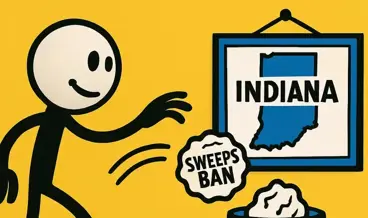
Indiana lawmakers are divided over whether to ban or regulate online sweepstakes casinos.
 LISTEN TO THIS ARTICLE:
At an often-heated initial hearing on House Bill 1052 in the Indiana Statehouse last week, members of the House Public Policy Committee signaled deep disagreement about whether the state should prohibit online sweepstakes casinos or create a regulatory regime to govern them. The hearing comes as the state is also weighing broader gambling changes linked to the Indiana online lottery debate, adding pressure on lawmakers to clarify how sweepstakes platforms fit into existing law.
Representative Steve Bartels offered Amendment 6 as an alternative to an outright ban. The amendment would establish licensing and oversight rules for sweepstakes operators, including a $100,000 registration fee for five-year terms, mandatory annual audits, geolocation and age-verification requirements, employee training, limits on player exposure, participation in the state’s prohibited persons program and a 48-hour deadline for prize payouts. Bartels argued the approach protects consumers while bringing revenue and oversight to an activity he said is currently legal under Indiana law.
“Ultimately what this does is say we’re not going to ban it. We’re going to start regulating it”, Bartels told the committee. “We can start protecting citizens. We can do the age verification. We can make sure they’re not advertising incorrectly or trying to target kids or people under 21.” He also noted that the general counsel for the Indiana Gaming Commission has acknowledged that, under existing statutes, sweepstakes platforms are not per se illegal.
Representative Jim Lucas voiced strong support for Bartels’ alternative, declaring he was “100% against just outright banning them”. Lucas emphasized that sweepstakes operators have been active for more than a decade and serve hundreds of thousands of Hoosiers who use the services within the law. “It’s incumbent upon us to find a way to make this work because we obviously have other industries that we have molded ourselves around lawfully”, he said.
Representative Cory Criswell backed the regulatory route as well, saying the amendment would give operators a pathway to operate transparently and allow the state to derive revenue while protecting consumers.
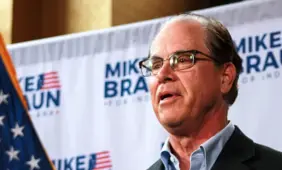
But committee chair and bill author Representative Ethan Manning remained unconvinced. Manning said regulating sweepstakes while commercial iGaming remains unlicensed in Indiana would be “out of order”, arguing the state should not create lower oversight standards for sweepstakes than for brick-and-mortar casinos. He also questioned assigning primary regulatory responsibility to the Office of the Attorney General, an element in Bartels’ proposal that Bartels said he was willing to revise. Manning said the approach reflected the original intent of the HB 1052 sweepstakes ban, which he argued should not be diluted through partial regulation.
Other members expressed procedural concerns. Representative Peggy Mayfield cautioned that HB1052 is primarily an administrative bill and that introducing major policy changes about what constitutes gambling needs further deliberation. “You have to risk something of value, you have to receive something of value, and the determining factor has to be chance”, she said, noting that if any element is removed the activity may not legally qualify as gaming.
More Regulation

What Comes Next for HB1052
No vote has been held on HB1052 or any amendments. The Public Policy Committee has 13 members, and a simple majority is required to advance the measure to the next stage. That arithmetic leaves the bill’s fate uncertain; swings by a few members could determine whether the committee approves a ban, a regulated framework, or strikes sweepstakes from the bill entirely.
Industry observers say the debate in Indiana stands in contrast to recent proceedings in states such as California, New York and New Jersey, where sweeping prohibition bills advanced with relatively brief hearings. Regulators and legislators elsewhere have cited consumer protection, addiction risk and competition with state-run or licensed gaming as motivating factors for bans.
An Indianapolis-based gaming-law attorney who asked not to be named said: “Regulation would put clear rules on operators, require identity and age checks, and allow the state to audit payouts – it’s a pragmatic middle ground. Prohibition can be costly to enforce and drives operations further into gray markets.”
Legislative staff have signaled that any final language could be adjusted as the committee considers competing amendments. With the 2026 session underway, stakeholders from the Indiana Gaming Commission, the Attorney General’s office and industry groups are expected to intensify lobbying efforts in the coming weeks.
For now, the decision rests with the Public Policy Committee: whether to embrace a regulated model designed to capture fees and impose safeguards, or to side with prohibition advocates who view sweepstakes casinos as a threat to the state’s existing gaming framework and consumer welfare.
RELATED TOPICS: Regulation
Latest News
 Responsible Gambling
Florida Gaming Control Commission Promotes Playwise During Problem Gambling Awareness Month
Feb 27, 2026
Most Read
Must Read
 Interviews
Exclusive Interview: Levon Nikoghosyan Shares AffPapa Winning Formula for Successful iGaming Events
Dec 03, 2025 Interviews
Review this New Post
Leave a Comment
User Comments
Comments for Indiana Lawmakers Split over Sweeps Casino Ban Versus Regulation