Trump’s “No Tax on Tips” Reform Puts Las Vegas Casino Workers in Focus

Expertise: US Gaming, European Gaming Industry, iGaming
LISTEN TO THIS ARTICLE:
President Donald Trump’s “no tax on tips” reform is beginning to take effect across the United States, with Las Vegas casino workers among the most directly impacted. The policy, introduced as part of a broader tax package and a key component in the One Big Beautiful Bill Act (OBBBA) signed into law in 2025, allows qualifying tipped income to be deducted from taxable earnings, a change aimed squarely at service-heavy economies like Nevada.
The measure, formally structured as a federal deduction rather than a full exemption, applies to cash tips reported through employer statements or self-reported filings. For workers in casinos including dealers, bartenders, and bell staff, where gratuities make up a significant share of income, the change is expected to alter take-home pay in a meaningful way.
No Tax on Tips Rules Begin to Take Shape
Under the new no tax on tips rules, eligible workers can deduct up to $25,000 in qualified tips annually. The deduction begins to phase out for individuals earning above $150,000, or $300,000 for joint filers, with reductions applied incrementally based on income thresholds.
The legislation defines “qualified tips” as voluntary cash payments or an equivalent medium, such as check, credit card, debit card, gift card, tokens that are readily exchangeable for a fixed amount in cash, or another form of electronic settlement or mobile payment application denominated in cash, received in occupations that historically rely on gratuities. That distinction is particularly relevant in Las Vegas, where casino floors and hospitality services operate on tipping as a core part of compensation.
Federal guidance has also clarified which occupations qualify, reinforcing that roles traditionally associated with tipping, including casino dealers and hospitality staff, fall within the scope of the provision.
Las Vegas Casino Workers at the Center of the Policy
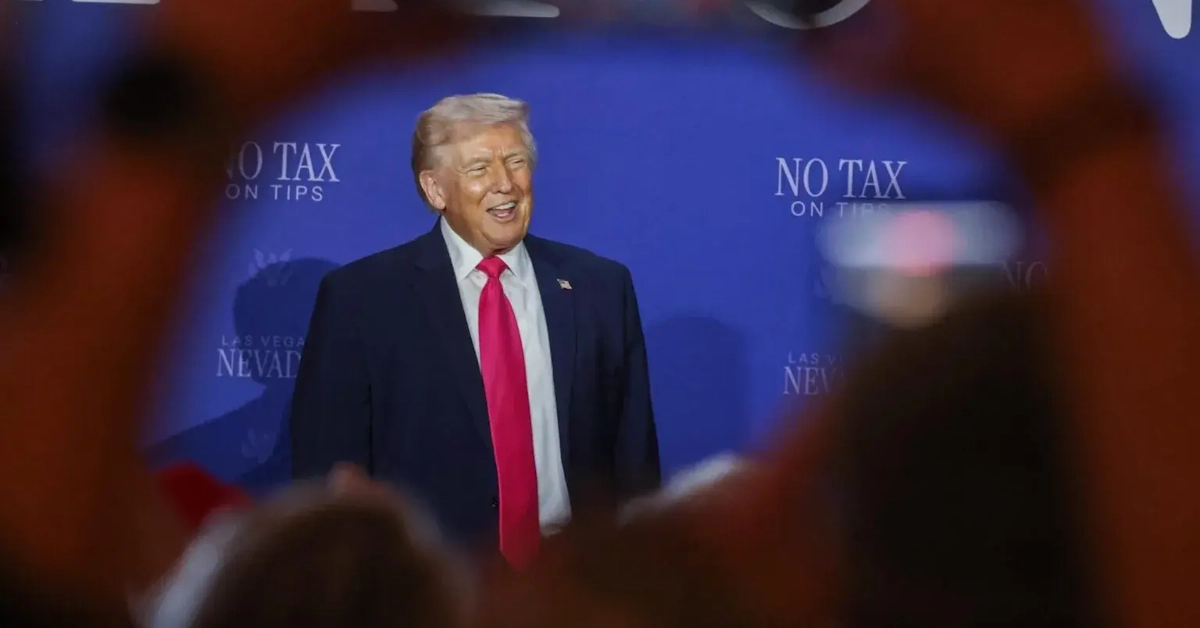
Las Vegas has emerged as a focal point for the reform, both politically and economically. During his attendance on Tax Dat roundtable in Vegas, Trump recalled that the idea originated from a conversation with a local worker, saying a Las Vegas woman suggested making tips tax-free. He framed the policy as direct relief for “thousands of Nevada waiters and waitresses, casino dealers, bartenders, bellmen, barbers, caddies.”
“Every single American at every income level has more money in their pockets this week because of the Republican tax policies,” Trump said, adding that the future of those benefits could depend on upcoming midterm election outcomes.
For many in the city’s hospitality sector, the change comes at a time of rising living costs. While the policy increases tax refunds with averages reportedly exceeding $3,400 this year, some workers note that gains are being offset by higher expenses, particularly fuel and groceries.
Still, the ability to deduct tip income is viewed by many as a direct and tangible benefit, especially in a market where tipping remains a primary earnings driver.
No Tax on Tips Provision Raises Long-Term Questions
Despite its immediate impact, the no tax on tips provision is not without limitations. The deduction applies only to voluntary tips and excludes negotiated or mandatory service charges, narrowing its scope in certain hospitality settings.
There are also ongoing questions about duration. Industry observers and workers alike are asking when does no tax on tips expire, as the policy’s long-term future may depend on political outcomes and broader tax reform negotiations.
The structure of the deduction, capped and income-tested, suggests it is designed as targeted relief rather than a permanent overhaul of how tipped income is taxed.


Trump Tax Refund Promise Meets Economic Reality
The reform has been closely tied to Trump’s broader economic messaging, including a renewed tax refund promise centered on increasing disposable income for working Americans.
In Las Vegas, where tourism-driven income fluctuates with economic conditions, the policy offers a buffer but not a complete solution. Analysts note that while higher refunds may temporarily offset rising costs, external factors such as fuel prices and visitor spending trends continue to shape overall earnings for casino workers.
For now, the no tax on tips policy is delivering measurable short-term gains for a workforce heavily reliant on gratuities. Whether those gains translate into lasting financial relief or become a focal point in upcoming political debates, remains to be seen.
For a broader view of how taxes may affect your overall earnings, including gambling winnings alongside tip income, you can use our U.S. gambling tax calculator for a quick estimate.
RELATED TOPICS: Vegas


