Pennsylvania Supreme Court Rules Skill Games Are Slot Machines

Expertise: US Gaming, European Gaming Industry, iGaming
LISTEN TO THIS ARTICLE:
HARRISBURG, Pa. – Pennsylvania’s Supreme Court has ruled that skill games are slot machines under state gambling law.
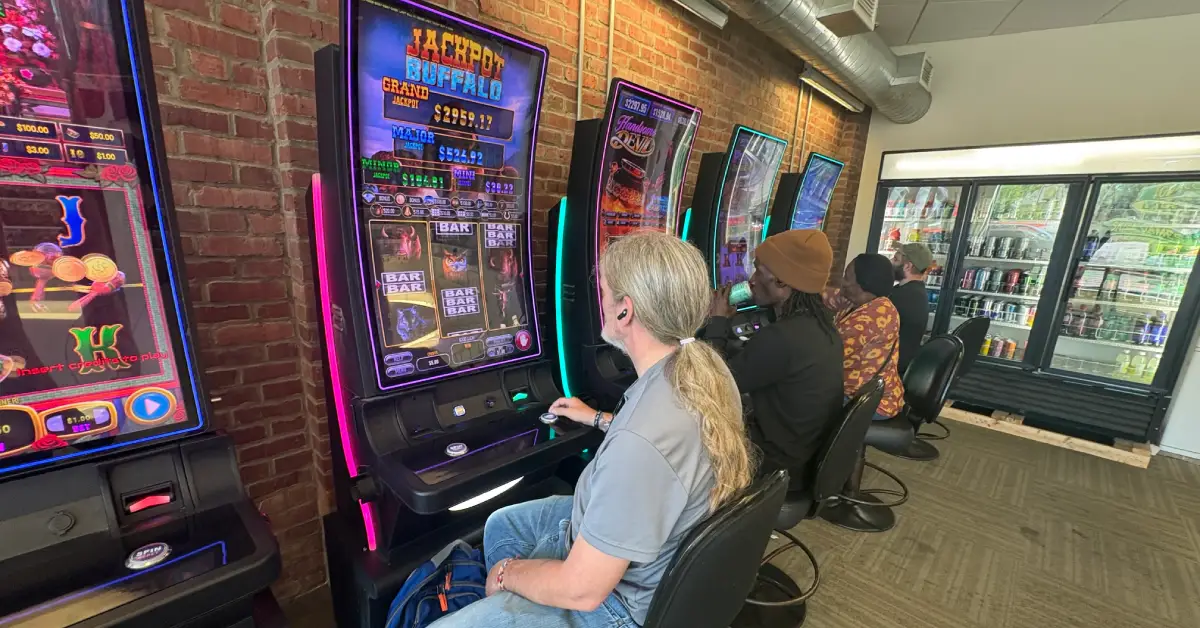
The decision gives lawmakers 120 days to decide whether to legalize, regulate and tax the devices, after months of uncertainty over the fate of Pennsylvania skill games. The ruling could reshape a gray-market gambling sector estimated at about 70,000 machines across taverns, gas stations, corner stores and clubs.
The court ruled that skill games must comply with Pennsylvania’s crime and gambling statutes, reversing lower-court decisions that had treated the devices as outside slot-machine regulation. The ruling also puts new pressure on the legislature during budget talks, with Republican Senate leaders calling skill games a “critical piece” of this year’s budget negotiations.
Court Rejects Skill-Based Argument
The ruling covered two cases involving the status of skill games in Pennsylvania. One began after police seized machines from a bar and supplier in 2019, while the other was brought by Pace-O-Matic, a major developer and distributor that sought a court judgment on whether its games were legal.
Lower courts had sided with the skill-game industry, finding that the machines involved enough player skill to avoid being treated as regulated slot machines. The state Supreme Court rejected that reasoning, saying the Commonwealth Court’s interpretation of the law was “deeply flawed” and “incorrect on both points”.
The justices wrote that a skill game is a slot machine “several times over” because it meets the statutory definition and the ordinary meaning of a gambling machine that pays out based on matching symbols. The court said any minor skill element does not remove the devices from Pennsylvania’s gambling laws.
Lawmakers Face 120-Day Deadline
Although the court ruled against the skill-game industry, it delayed enforcement action for 120 days. That pause gives Pennsylvania lawmakers a four-month window to pass legislation regulating and taxing the machines.
If lawmakers do not act, the devices could be seized by law enforcement. The issue has been debated for years in Harrisburg, but lawmakers have failed to agree on a tax rate and regulatory structure.
The Independent Fiscal Office has estimated that taxing skill games could eventually generate more than $1 billion annually. Gov. Josh Shapiro’s proposed budget would tax the machines at 52%, close to Pennsylvania’s 55% rate on casino slot machines and electronic games. Senate Republican leaders have backed a 35% rate, while some Republicans have pushed for 16%.
 Regulation
Brendan Sorsby Will Not Play for Texas Tech After Gambling Eligibility Fight
Jun 17, 2026

Tax Fight Moves into Budget Talks
The ruling brings casinos, small businesses, veterans’ groups and skill-game companies back into a high-stakes policy fight. Casinos have favored a higher tax rate, while the skill-game industry argues that heavy taxation would hurt small businesses and clubs that rely on the machines for revenue.
Pace-O-Matic said it was disappointed with the ruling and argued that the decision did not reflect the facts presented in court. The company said small businesses and fraternal clubs could now face the choice of removing the games or accepting regulation and taxation it considers excessive.
Some lawmakers have also warned against treating skill games only as a revenue source. State Rep. Ben Waxman, a Philadelphia Democrat, said the debate could amount to the largest gambling expansion in Pennsylvania since casinos and warned against short-term budget decisions with long-term consequences.
The court said the legislature remains free to take whatever action it considers appropriate. That leaves the next decision in Harrisburg, where lawmakers must now decide whether Pennsylvania’s skill-game market becomes regulated, heavily taxed or exposed to a statewide enforcement crackdown.
RELATED TOPICS: Regulation
Latest News
 Regulation